National Police Clearance Philippines 2026– Complete Guide for Online Application
In 2026, background verification has become a critical requirement across almost every major sector in the Philippines. Whether you are applying for a local job, planning to work overseas, registering a business, or completing government-related transactions, one document is requested more frequently than ever before the National Police Clearance.
Issued by the Philippine National Police (PNP), this clearance serves as official proof that an individual has been checked against the nationwide police database and does not have any recorded criminal involvement, or that any record has been properly reviewed and verified. As digital public services continue to expand, the National Police Clearance Philippines system has evolved into a streamlined online platform that allows applicants to register, pay fees, book appointments, and track their clearance status with ease.
This complete and updated 2026 guide explains everything you need to know about National Police Clearance, including its purpose, legal basis, application steps, fees, requirements, common issues, and the latest system updates—ensuring you have clear, accurate, and reliable information from start to finish.
The same digital transformation is making essential government services easier to access online. From platforms like Mi Portal FONE, which helps SEP teachers manage payroll records, to online police clearance services, citizens can now manage important records and applications more conveniently.

What Is National Police Clearance?
A National Police Clearance Certificate is an official document issued by the Philippine National Police after verifying an applicant’s identity and checking their name and biometric data against the PNP’s centralized criminal records database.
Unlike a local police clearance, which only checks records within a single city or municipality, National Police Clearance Philippines provides nationwide coverage. This means police records from multiple regions and police stations across the country are reviewed, making the clearance more comprehensive and widely accepted.
If you need a PNP Clearance Certificate, book your Police Clearance appointment today. This official guide covers the application process, requirements, fees, and appointment booking for a smooth, hassle-free experience.
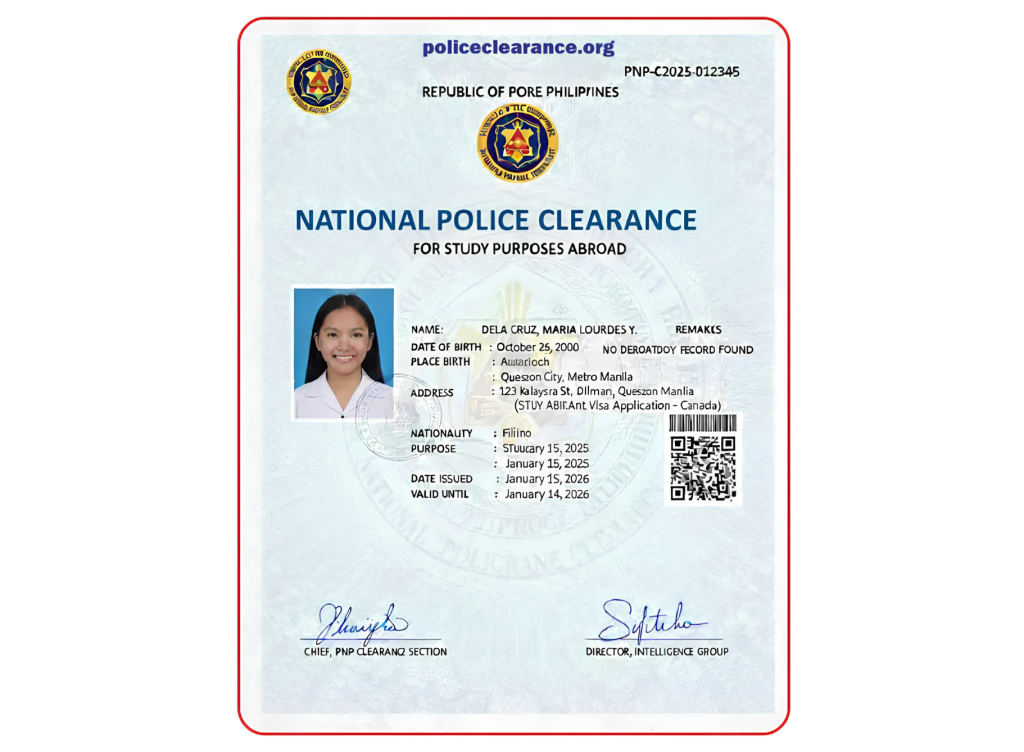
The document confirms:
- Your identity has been validated
- Your name has undergone nationwide police record verification
- You have no unresolved criminal record, or any record has been officially cleared
Note: Because of this broader scope, many institutions now prefer National Police Clearance over local police clearance.
Looking about information about police clearance requirements and applications? Pnp payslip portal provides helpful guides on police clearance certificates, requirements and application processes. For applicants in the Philippines, you can also learn more about the NBI Clearance process and requirements.
Read More: Police Clearance Certificate
Legal Basis of National Police Clearance in the Philippines
The issuance of the National Police Clearance is anchored in the Philippine National Police’s mandate to maintain peace, order, and public safety. As part of its duties, the PNP verifies criminal records and issues clearances for lawful purposes. At the same time, PNP Payslip Online provides officers a convenient and secure way to access their earnings and official payroll records anytime, ensuring transparency and efficiency in managing their professional information.
Government agencies, private companies, and financial institutions rely on National Police Clearance Philippines to ensure transparency, integrity, and accountability. The integration of biometric verification and centralized data systems further strengthens its credibility as an official background verification document.
Why National Police Clearance Is Important in 2026
A police clearance is commonly requested when an organization needs evidence concerning an applicant’s police record. Employers, government offices, licensing authorities, businesses, and other organizations may request a current clearance depending on the purpose of the transaction.
The National Police Clearance is particularly useful because the NPCS provides a standardized process for obtaining a police clearance through participating police stations.
Applicants should always check the exact requirements of the organization requesting the document. A National Police Clearance does not automatically replace an NBI Clearance, barangay clearance, court certificate, or another document when a particular agency specifically requires one.
Common Uses of National Police Clearance
A National Police Clearance may be requested for purposes such as:
- Local employment and job applications
- First-time employment requirements
- Government employment
- Civil service-related applications
- Business and professional transactions
- Security and related licensing requirements
- Overseas employment or documentation
- Visa or immigration-related requirements when specifically requested
- Legal or administrative transactions
- Certain applications involving government agencies
- Other transactions where a PNP police clearance is specifically required
The purpose selected during the NPCS application should accurately reflect why you are requesting the clearance.
Benefits of National Police Clearance
The National Police Clearance System provides a centralized and more standardized approach to police clearance processing. Instead of completing the entire application manually at a police station, applicants can perform important preliminary steps online.
Key Advantages
The main advantages include:
- Online account registration
- Online profile completion
- Appointment scheduling through NPCS
- Selection of a participating police station
- Online payment options
- Nationwide availability through participating locations
- Biometric identification and verification
- A standardized clearance document
- Online clearance verification through the NPCS website
The official NPCS website also provides a Verify Your Clearance function where clearance information can be checked using the required details.
Types of Police Clearance in the Philippines
The term “police clearance” can refer to different services depending on the issuing authority and purpose.
The National Police Clearance is processed through the PNP’s National Police Clearance System and is designed for nationwide police-record verification.
A local police clearance may refer to a clearance or certification issued through a particular local police station or local process. Requirements and procedures can vary depending on the transaction.
The NBI Clearance is separate from PNP National Police Clearance and is issued by the National Bureau of Investigation. Applicants should therefore confirm whether their employer or agency specifically requires a PNP Clearance, National Police Clearance, or NBI Clearance.
Who Can Apply for National Police Clearance Philippines?
The NPCS service is available to applicants who need a National Police Clearance for an accepted purpose. The PNP Citizen’s Charter identifies the transaction as available to concerned citizens and provides the requirements and procedure for obtaining the clearance.
Applicants should provide truthful and accurate information during registration. Names, dates of birth, identification information, and other personal details should be entered carefully because inconsistencies can lead to additional verification or delays.
Foreign nationals and applicants with special circumstances may have different documentation requirements. When applicable, they should confirm the requirements directly with the PNP or the selected police station.
Step-by-Step Online Application for National Police Clearance
The National Police Clearance application begins online through the official National Police Clearance System (NPCS) portal.
The basic process consists of online registration, profile completion, appointment scheduling, payment, personal appearance, biometric capture, verification, and release of the clearance. The PNP’s own application guide summarizes the process as online registration and appointment, payment, photo/fingerprint capture, and release.
Step 1: Register an Online Account
Visit the official NPCS website at pnpclearance.ph.
New applicants should select the registration option and provide the information requested by the system, including an active email address and other required personal information.
After registration, check the email account used during registration for the NPCS confirmation message. If the email does not appear in the inbox, check the spam or junk folder.
Use an email account that you can access because it may be needed for account verification and future communication.
Step 2: Complete Your Personal Profile
After activating your account, sign in to NPCS and review your applicant profile.
Enter the required personal information carefully and make sure it corresponds with your valid identification document. Check the spelling of your name, date of birth, address, contact information, and other details before saving the profile.
Incorrect information can create problems during identity verification, so reviewing the profile before making an appointment is strongly recommended.
Step 3: Select National Police Clearance
After completing your profile, proceed to the Clearance Application section.
Select the appropriate purpose for your clearance. The available purpose options can depend on the current NPCS configuration and your intended transaction.
Do not select a purpose simply because it appears convenient. Choose the option that accurately corresponds to how you intend to use the clearance.
Step 4: Schedule an Appointment
Choose an available police station and appointment date through NPCS.
Available dates and time periods depend on the station’s appointment capacity. Popular stations may have fewer immediately available slots, particularly during periods of high demand.
After confirming your appointment information, save the generated reference number. Keep a copy of your appointment details because you may need them when you appear at the police station.
Step 5: Pay the Clearance Fee
After scheduling your appointment, proceed to the payment section shown by NPCS.
The standard National Police Clearance fee reflected in recent PNP Citizen’s Charter materials is ₱150, although payment channels may impose transaction-related charges and applicants should verify the amount displayed by the official system at the time of payment.
Save your payment confirmation or electronic official receipt. Proof of payment is listed among the requirements in PNP Citizen’s Charter materials.
Step 6: Visit the Police Station
Online registration does not normally mean the entire process is completed remotely.
On your appointment date, visit the police station selected in NPCS and bring your required identification document, appointment/reference information, and payment confirmation.
The police station will complete identity verification and biometric capture, including your photograph, fingerprints, and signature. After verification and processing, your National Police Clearance can be released according to the applicable procedure.
National Police Clearance Fees and Processing Time
Updated Fees
Recent PNP Citizen’s Charter documents show a ₱150 National Police Clearance fee in the standard process. However, applicants should verify the current amount shown by NPCS before paying because payment arrangements, transaction charges, or local implementation details can change.
First-time jobseekers may qualify for a fee waiver under RA 11261, provided they satisfy the requirements of the First Time Jobseekers Assistance Act. The law states that police clearance is among the covered government documents and that the benefit is available subject to its eligibility requirements.
Processing Time
Processing time at the police station can be relatively short when the applicant’s information is complete and there is no issue requiring additional verification.
For example, one PNP Citizen’s Charter records a total processing time of approximately 11 minutes for the listed National Police Clearance transaction, while another PNP Citizen’s Charter records approximately 10 minutes for its process. Actual waiting time can be longer depending on queues, appointment volume, system availability, and whether additional verification is required.
A Hit or record requiring further verification can also affect how quickly the clearance is released.
Requirements for National Police Clearance
Applicants should prepare their documents before going to the police station.
Basic Requirements
The PNP Citizen’s Charter lists the following core requirements for the National Police Clearance transaction:
- One valid government-issued ID
- Completed online registration and appointment
- Payment confirmation or electronic official receipt, when a fee applies
- Appointment/reference number
The exact identification requirements can vary by current PNP instructions and the applicant’s circumstances, so applicants should check the requirements displayed by NPCS and the selected police station before the appointment.
Your ID should be original, valid, and contain information that allows the police personnel to verify your identity.
National Police Clearance for First-Time Job Seekers
First-time jobseekers can receive an important benefit when applying for employment-related government documents.
Under Republic Act No. 11261, government fees and charges for covered employment documents, including police clearance, are waived for eligible first-time jobseekers. The benefit is generally available only once and requires proof of eligibility.
Required Documents
A first-time jobseeker should obtain the required Barangay Certification confirming first-time jobseeker status.
The law specifically provides that an applicant claiming the benefit must present a barangay certification stating that the person is a first-time jobseeker.
Applicants should also bring the identification and other documents required by the NPCS process.
The free-clearance benefit should not be treated as an automatic discount for every applicant. It applies to eligible first-time jobseekers under the conditions established by RA 11261.
Understanding “Hit” Status in National Police Clearance
A “Hit” status does not automatically mean that an applicant has committed a crime.
A Hit generally means the system has identified a record or name match that requires further verification. Similar or identical names can result in a Hit, which is why additional checking may be necessary before the clearance can be finalized.
If you receive a Hit, follow the instructions provided by the police personnel or NPCS. Do not assume that the result means you have a criminal record.
Additional verification may take longer than a straightforward application because personnel need to determine whether the record actually belongs to the applicant.
National Police Clearance Digital Verification System
The NPCS website provides an online clearance verification function. The official portal allows users to verify a clearance using information such as the surname and clearance number.
Digital verification helps organizations and other authorized users confirm the authenticity of a National Police Clearance rather than relying solely on a printed document.
When presenting a clearance to an employer or agency, make sure the document is genuine and that the information matches your identity.
National Police Clearance for Online Jobs and Freelancers
Remote workers, freelancers, virtual assistants, online professionals, and other independent workers may occasionally be asked to provide a police clearance.
The requirement usually comes from the client, employer, platform, contracting company, or another organization rather than from the general concept of freelancing itself.
If an online employer specifically asks for a Philippine National Police Clearance, you can apply through NPCS using the appropriate purpose available in the system.
Before paying for a clearance, confirm exactly which document the client requires. Some organizations may instead request an NBI Clearance, barangay clearance, or another form of background verification.
National Police Clearance for Overseas Employment
A police clearance may be requested as part of certain overseas employment, immigration, visa, or foreign background-check procedures.
However, requirements differ between countries, employers, recruitment agencies, and immigration authorities. Some foreign authorities may specifically request an NBI Clearance, while others may request police certificates or additional authentication.
Before applying, check the exact document name required by the foreign employer, embassy, immigration authority, or recruitment agency.
For first-time jobseekers, RA 11261 expressly covers certain employment documents required for employment locally or abroad, subject to the law’s conditions and exceptions.
National Police Clearance Renewal and Reapplication
If you previously obtained a National Police Clearance, do not automatically assume that the old document can be reused indefinitely.
The official validity stated by PNP/local government guidance is generally six months. For example, a PNP-related municipal government page states that a National Police Clearance is valid for six months.
When the clearance has expired or a new document is required for another purpose, follow the current NPCS instructions for reapplication or renewal.
The availability of renewal-related options can depend on the applicant’s previous record, biometric information, and the current NPCS process. Always follow the instructions shown in your account rather than relying on an outdated tutorial.
National Police Clearance Name Correction Requests
Accuracy is extremely important when applying for a National Police Clearance.
If your name, birth information, address, or another personal detail was entered incorrectly, do not create multiple accounts simply to correct the mistake.
First review the correction options available in your NPCS account. If the information cannot be corrected online, contact the appropriate NPCS support office or ask the police station handling your application how to proceed.
The official NPCS website provides contact information for the NPCS One-Stop Shop at Camp Crame, Quezon City, including its listed telephone and mobile contact details.
National Police Clearance for Business Owners and Entrepreneurs
Business owners and entrepreneurs may encounter police clearance requirements when applying for certain permits, licenses, registrations, accreditations, or other official transactions.
However, a National Police Clearance is not a universal requirement for every business registration or permit.
If a government office, licensing authority, client, or business partner specifically requests a PNP clearance, confirm the required document and purpose before starting your application.
This prevents you from paying for or obtaining a clearance that does not satisfy the requesting organization’s requirements.
Biometric Data Policy for National Police Clearance
The National Police Clearance process involves personal and biometric information because the applicant’s identity must be verified.
Depending on the application, biometric processing can include a photograph, fingerprints, and signature. PNP Citizen’s Charter materials describe biometric and photo capture as part of the National Police Clearance procedure.
Applicants should only provide personal information through the official NPCS website or authorized PNP channels.
Avoid giving your NPCS password, payment credentials, identification numbers, fingerprints, or other sensitive information to unofficial websites or individuals claiming that they can “process” your clearance for you.
National Police Clearance for Government and Civil Service Applicants
Government agencies and employers may request a police clearance as part of recruitment, employment, accreditation, or other administrative processes.
If a government office specifically requires a National Police Clearance, applicants can use the NPCS process to obtain it.
However, a police clearance should not be confused with the Civil Service Examination, civil service eligibility, or other requirements administered by the Civil Service Commission. These are separate government processes.
Similarly, if a government agency specifically asks for an NBI Clearance, an NPCS National Police Clearance may not be an acceptable substitute.
Appointment Slot Availability and Demand Issues
Appointment availability depends on the selected police station.
Some locations may have many available appointments, while busy stations may fill their schedules quickly. Demand can increase around hiring periods, school requirements, government recruitment, overseas employment deadlines, and other periods when many people need clearances.
If your preferred station does not show a convenient appointment, check other participating stations available through NPCS.
Book early when you have a fixed deadline, and allow enough time for possible delays caused by a Hit, system issue, missing document, or rescheduling.
Validity of National Police Clearance Philippines
A National Police Clearance is commonly stated as valid for six months. PNP-related government guidance, including the Peñaranda municipal government page, states that the issued National Police Clearance is valid for six months.
However, “valid for six months” does not necessarily mean every employer or government agency will accept a clearance issued at any point within that period.
The organization requesting your clearance may impose its own recency requirement. For example, an employer may ask for a clearance issued within the last three months.
Therefore, always check the requesting organization’s instructions before relying on an existing clearance.
Future Developments in National Police Clearance System
The National Police Clearance System continues to be the subject of legislative proposals intended to formalize or institutionalize the system.
This is an important distinction for applicants: proposals to create a specific National Police Clearance System law do not necessarily mean that the proposed legislation has already become law.
House Bill No. 7347 from the 19th Congress proposed establishing the NPCS, but its legislative record shows that it remained pending. The 20th Congress has also seen new proposals concerning the NPCS, including House Bill No. 2174 and House Bill No. 1412.
Future changes may affect fees, requirements, digital services, data management, appointment procedures, or the legal framework. Applicants should therefore check the official NPCS portal and PNP announcements for current instructions.
Tips for a Smooth National Police Clearance Application
You can reduce delays by preparing everything before your appointment.
Use an active email address. Your NPCS account depends on the email used during registration.
Check your personal information carefully. Your profile should match your valid ID.
Book your appointment early. Popular stations can have limited availability.
Save your reference number. You may need it when you arrive at the police station.
Keep your payment confirmation. Proof of payment is part of the listed requirements for the standard paid process.
Bring the correct ID. Check the current NPCS requirements before your appointment.
Arrive on time. Give yourself enough time to locate the station and complete the process.
Do not panic about a Hit. A Hit can require additional verification and does not automatically establish that you have a criminal record.
Do not use unofficial payment or registration websites. Use the official NPCS portal and authorized payment channels.
Check your clearance before submitting it. Make sure your name and other details are correct.
Data Privacy and Security
National Police Clearance applications involve sensitive personal information and biometric data, so applicants should take data security seriously.
Use only the official NPCS website when registering or signing in. The official portal identifies itself as the National Police Clearance System and displays a National Privacy Commission registration seal.
Never share your NPCS password with another person. Be cautious of websites that ask for your complete government ID information, account password, payment credentials, or other sensitive data in exchange for supposedly faster processing.
The safest approach is to complete the application yourself through the official PNP/NPCS system and provide documents only to authorized personnel when required.
Frequently Asked Questions (FAQs)
How do I apply for National Police Clearance in the Philippines?
Start by visiting the official NPCS website at pnpclearance.ph. Register or sign in, complete your profile, submit the clearance application, select an appointment and police station, pay the applicable fee, and personally visit the selected station for biometric capture and verification.
What is the official National Police Clearance website?
The official National Police Clearance System website is pnpclearance.ph. The PNP Citizen’s Charter also directs applicants to this website for online registration and appointment.
How much is National Police Clearance in 2026?
Recent PNP Citizen’s Charter materials list the standard fee as ₱150. Applicants should verify the current amount displayed by NPCS before payment because payment-related charges or procedures may change.
Is National Police Clearance free for first-time jobseekers?
Eligible first-time jobseekers can receive a waiver of covered government fees under RA 11261, subject to the law’s requirements. A Barangay Certification stating that the applicant is a first-time jobseeker is required as proof of eligibility.
Do I need an appointment for National Police Clearance?
The standard NPCS process includes online registration and appointment scheduling. Applicants should follow the appointment instructions shown in NPCS and attend the selected police station at the scheduled time.
Do I need to visit the police station?
Yes. Online registration does not generally eliminate the personal appearance requirement. Applicants need to visit the selected station for identity verification and biometric capture, including photograph and fingerprints.
What should I bring to my appointment?
Bring your valid government-issued ID, appointment/reference information, and payment confirmation when applicable. First-time jobseekers claiming the RA 11261 benefit should also bring the required Barangay Certification.
What does Hit mean in National Police Clearance?
A Hit means the system has identified information requiring additional verification. It does not automatically mean that the applicant has a criminal record. Follow the instructions from the police personnel handling your application.
How long is National Police Clearance valid?
The National Police Clearance is commonly stated as valid for six months. However, an employer or requesting agency may impose a stricter requirement regarding how recently the clearance must have been issued.
Can I renew my National Police Clearance online?
The NPCS may provide renewal or reapplication options depending on your circumstances and the current system. Check your NPCS account for the option available to you rather than assuming that every applicant qualifies for remote renewal.
Is National Police Clearance the same as NBI Clearance?
No. National Police Clearance is a PNP service processed through NPCS, while NBI Clearance is issued by the National Bureau of Investigation. If an organization specifically requests one of these documents, obtain the document named in its requirements.
Can I use National Police Clearance for overseas employment?
It may be accepted when an employer, immigration authority, embassy, or other organization specifically requests it. Overseas requirements differ, so confirm whether you need a PNP National Police Clearance, NBI Clearance, authentication, or another document.
Can freelancers get National Police Clearance?
Yes. A freelancer can apply when a client, employer, platform, or organization requires a police clearance. The applicant should select the appropriate purpose available through NPCS.
Can I change my appointment after booking?
Appointment changes depend on the current NPCS rules and the status of your payment. Review the appointment options shown in your account before paying because some systems restrict changes after payment.
What happens if I miss my appointment?
Check your NPCS account for available options and follow the current instructions. Depending on the circumstances, you may need to reschedule or submit another appointment request.
Can someone else get my National Police Clearance for me?
The standard process requires the applicant’s personal appearance for identity and biometric verification. Do not assume another person can complete these steps on your behalf.
Conclusion
The National Police Clearance Philippines 2026 application process is designed to make police clearance registration more convenient through the National Police Clearance System. Applicants can complete registration, profile information, appointment scheduling, and payment online before visiting their selected police station for identity verification and biometric capture.
For most applicants, the key steps are straightforward: create an NPCS account, complete your profile accurately, choose the appropriate clearance purpose, schedule an appointment, pay the applicable fee, and appear at the selected police station with the required documents.
Remember that requirements, fees, appointment availability, and online options can change. Before submitting an application, always check the official PNP National Police Clearance System at pnpclearance.ph and follow the latest instructions provided by the Philippine National Police.
Whether you need a PNP Clearance for employment, first-time jobseeker requirements, government work, business purposes, online work, or another official transaction, preparing your documents and information in advance can help make the process faster and avoid unnecessary delays.